

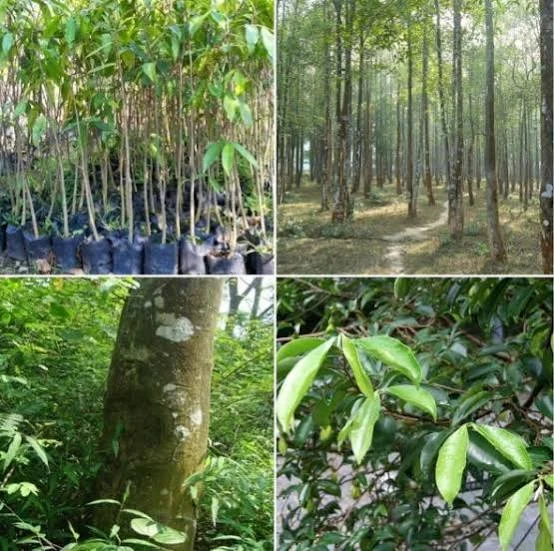
An Agarwood cultivation programme is a long-term, high-value commercial forestry model focused on growing Aquilaria trees to produce resinous heartwood—popularly known as Oud or "liquid gold". The programme transitions agriculture from traditional low-yield crops to premium cash crops.
For marginal and small farmers, it serves as an excellent long-term wealth generator. Since marginal farmers have limited land holdings, standard programmes structure the cultivation using a cooperative or cluster-based agroforestry model.
Benefits for Marginal Farmers
- High Financial Returns on Fragmented Land: Instead of utilizing vast fields, marginal farmers can plant Aquilaria trees along land boundaries, home gardens, or backyard fences. A single mature, successfully inoculated tree can fetch anywhere from ₹5,000 to over ₹1.5 lakh depending on the resin grade.
- Intercropping for Regular Cash Flow: Agarwood trees take 8 to 10 years to yield returns. To protect marginal farmers from cash shortages, programmes incorporate intercropping. Farmers grow short-term crops (like medicinal herbs, vegetables, banana, or ginger) between the tree rows to maintain steady, seasonal income while the trees mature.
- Risk Mitigation via Buy-Back Guarantees: Grassroots programmes run by NGOs and private clusters provide small farmers with certified saplings, technical training on artificial inoculation, and institutional market linkages—guaranteeing that the final yield will be bought at a fair market price.
Suitability in Bihar, Jharkhand, and Uttar Pradesh
While Agarwood historically thrives in the hot, highly humid, and hilly terrains of Northeast India (Assam and Tripura), it can be successfully grown in Bihar, Jharkhand, and Uttar Pradesh provided specific management constraints are addressed.
| StateSuitability LevelKey Geographical Advantages & Challenges | |||
| Bihar | Moderate to High (Varies by zone) | Advantages: The northern and northeastern plains (Kishanganj, Purnia, Araria) share a border/climate close to West Bengal and have rich alluvial soil and decent humidity. | Challenges: Central and Southern Bihar experience severe heatwaves in summer and waterlogging during monsoons, which can rot the root systems. Excellent drainage is mandatory. |
| Jharkhand | High (Most Naturally Fit) | Advantages: The hilly topography, sloped terrains, and well-aerated, rocky, or acidic soils of Chota Nagpur plateau mimic Agarwood's native environment perfectly. It natively prevents water stagnation. | Challenges: Frost in extreme winter pockets can damage young saplings, requiring initial protective shielding. |
| Uttar Pradesh | Moderate (Region-Specific) | Advantages: The eastern belt (Purvanchal) and the moist Terai regions bordering Nepal have favorable soil organic matter. | Challenges: The extreme dry heat and low relative humidity during North Indian summers (April–June) heavily challenge sapling survival. Intensive drip irrigation and shade-netting are required in the initial 2–3 years. |
Critical Requirements for Success in these States
To successfully cultivate Agarwood outside the Northeast, marginal farmers in these three states must implement two critical techniques:
- Artificial Inoculation: Naturally, less than 10% of wild trees get infected by the fungus that creates the resin. Farmers must use artificial fungal inoculation at Year 7 or 8 to guarantee resin production.
- Strict Drainage Management: Aquilaria trees love moisture but hate stagnant water. In flat areas of UP and Bihar, trees should only be planted on raised bunds or sloped lands.
Project Details
Support this Project
Your small contribution can make a significant difference in the success of this initiative.
Donate Now