

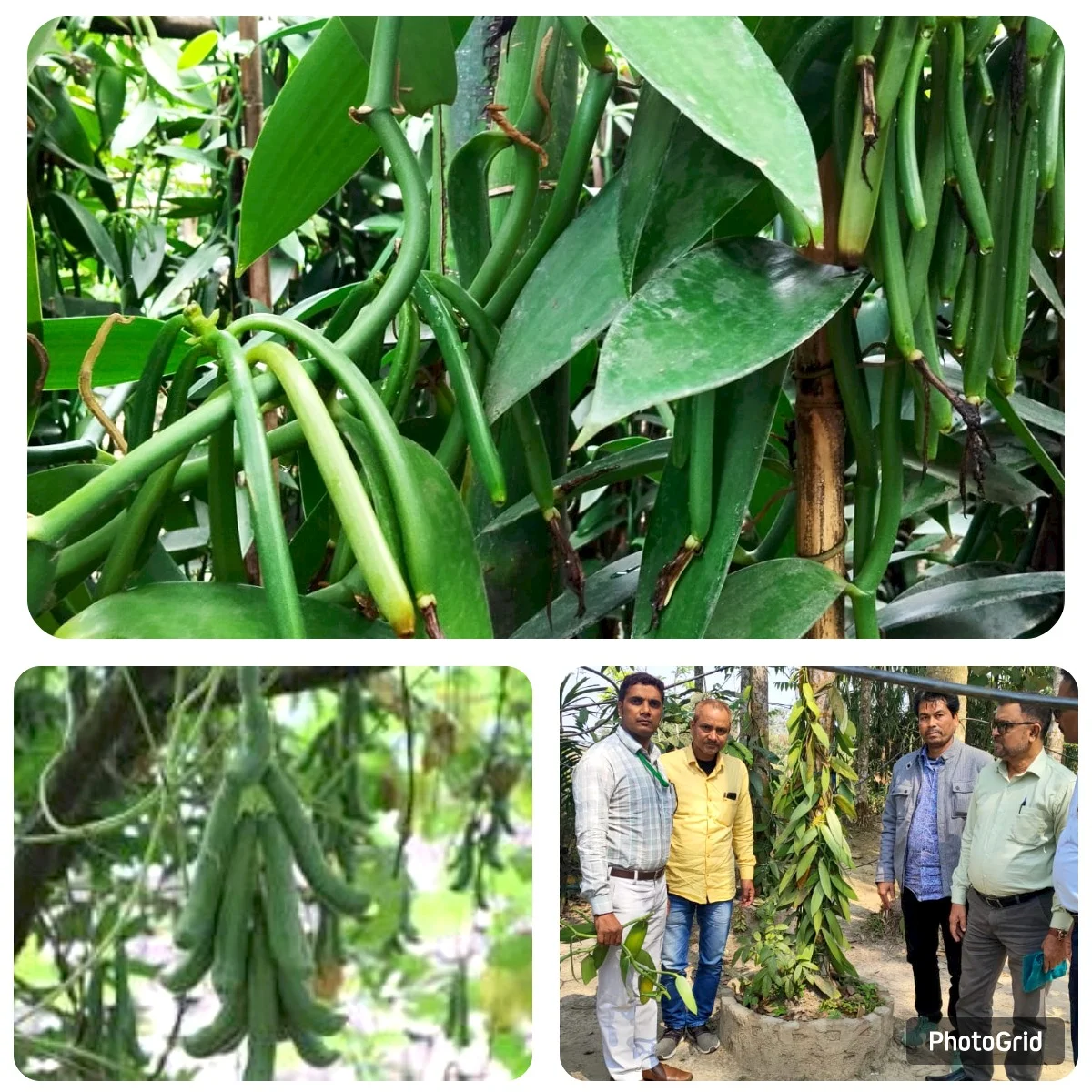
Vanilla Cultivation Programme
Vanilla cultivation is the specialized, highly labor-intensive agricultural process of growing the tropical climbing orchid Vanilla planifolia to harvest green seed pods that are subsequently cured into valuable vanilla beans.Key Cultivation Parameters Parameter Optimal Requirement Temperature 21°C to 32°C Annual Rainfall 1,500 mm to 3,000 mm Soil Type & pH Porous, well-drained loam with high humus (pH 6–7) Shade Level 50% to 75% filtered shade Average Yield 300 to 600 kg/ha of cured beans Climate and Soil Requirements· Temperature and Humidity: The plants need a warm and humid tropical climate with well-distributed rainfall for ten months and a short, two-month dry period to trigger flowering.· Shade Management: Vanilla vines are sensitive to direct, harsh sunlight and require shade trees to create a natural forest undergrowth environment.· Soil Conditions: The soil must be loose, friable, and rich in organic matter because vanilla roots stay close to the surface layer and depend on heavy leaf mulch.Propagation and Planting· Support Trees: Farmers plant live tutor trees or stakes at least six months before introducing the vanilla cuttings so the support system is fully established.· Stem Cuttings: Propagation relies on healthy stem cuttings ranging from 60 cm to 120 cm in length.· Planting Method: The lower leaves of the cutting are removed, and the defoliated portion is laid shallowly in loose soil or mulch, while the growing tip is tied gently to the support tree.Pollination and Care· Hand Pollination: Because natural insect pollinators are absent outside Mexico, workers must pollinate each waxy flower manually using a small wooden stick or bamboo splinter within hours of the flower opening.· Organic Manuring: Plants prefer organic fertilizers such as vermicompost, cow dung, or poultry manure applied around the base several times a year. · Mulching: Thick layers of leaf mulch are maintained around the base of the vines to retain moisture and supply necessary organic nutrients without disturbing the shallow root system.
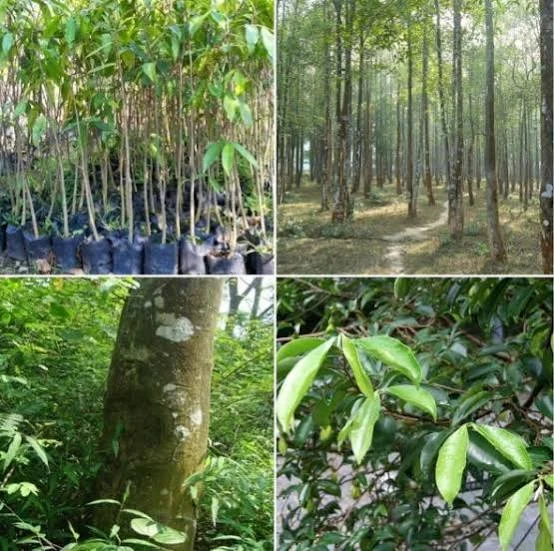
Agar Wood Cultivation Programme
An Agarwood cultivation programme is a long-term, high-value commercial forestry model focused on growing Aquilaria trees to produce resinous heartwood—popularly known as Oud or "liquid gold". The programme transitions agriculture from traditional low-yield crops to premium cash crops.For marginal and small farmers, it serves as an excellent long-term wealth generator. Since marginal farmers have limited land holdings, standard programmes structure the cultivation using a cooperative or cluster-based agroforestry model.Benefits for Marginal FarmersHigh Financial Returns on Fragmented Land: Instead of utilizing vast fields, marginal farmers can plant Aquilaria trees along land boundaries, home gardens, or backyard fences. A single mature, successfully inoculated tree can fetch anywhere from ₹5,000 to over ₹1.5 lakh depending on the resin grade.Intercropping for Regular Cash Flow: Agarwood trees take 8 to 10 years to yield returns. To protect marginal farmers from cash shortages, programmes incorporate intercropping. Farmers grow short-term crops (like medicinal herbs, vegetables, banana, or ginger) between the tree rows to maintain steady, seasonal income while the trees mature.Risk Mitigation via Buy-Back Guarantees: Grassroots programmes run by NGOs and private clusters provide small farmers with certified saplings, technical training on artificial inoculation, and institutional market linkages—guaranteeing that the final yield will be bought at a fair market price.Suitability in Bihar, Jharkhand, and Uttar PradeshWhile Agarwood historically thrives in the hot, highly humid, and hilly terrains of Northeast India (Assam and Tripura), it can be successfully grown in Bihar, Jharkhand, and Uttar Pradesh provided specific management constraints are addressed. StateSuitability LevelKey Geographical Advantages & ChallengesBiharModerate to High (Varies by zone)Advantages: The northern and northeastern plains (Kishanganj, Purnia, Araria) share a border/climate close to West Bengal and have rich alluvial soil and decent humidity.Challenges: Central and Southern Bihar experience severe heatwaves in summer and waterlogging during monsoons, which can rot the root systems. Excellent drainage is mandatory.JharkhandHigh (Most Naturally Fit)Advantages: The hilly topography, sloped terrains, and well-aerated, rocky, or acidic soils of Chota Nagpur plateau mimic Agarwood's native environment perfectly. It natively prevents water stagnation.Challenges: Frost in extreme winter pockets can damage young saplings, requiring initial protective shielding.Uttar PradeshModerate (Region-Specific)Advantages: The eastern belt (Purvanchal) and the moist Terai regions bordering Nepal have favorable soil organic matter.Challenges: The extreme dry heat and low relative humidity during North Indian summers (April–June) heavily challenge sapling survival. Intensive drip irrigation and shade-netting are required in the initial 2–3 years.Critical Requirements for Success in these StatesTo successfully cultivate Agarwood outside the Northeast, marginal farmers in these three states must implement two critical techniques:Artificial Inoculation: Naturally, less than 10% of wild trees get infected by the fungus that creates the resin. Farmers must use artificial fungal inoculation at Year 7 or 8 to guarantee resin production. Strict Drainage Management: Aquilaria trees love moisture but hate stagnant water. In flat areas of UP and Bihar, trees should only be planted on raised bunds or sloped lands.
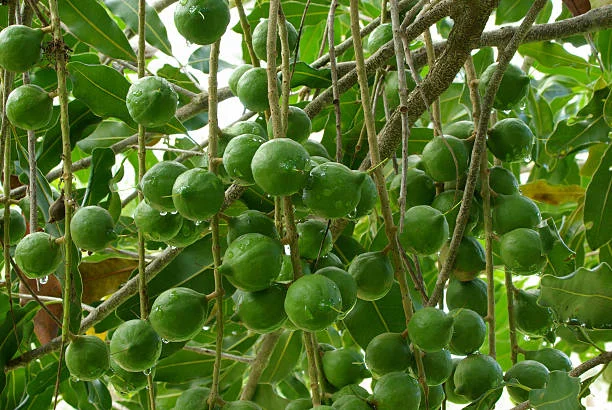
Macadamia Cultivation Programme
The Macadamia Cultivation Programme is a high-value commercial horticulture initiative focused on growing macadamia nut trees (Macadamia integrifolia). Often called the "Queen of Nuts," macadamias are among the most expensive tree nuts globally due to strong demand from the gourmet food, confectionery, and cosmetic industries.For marginal and small farmers, macadamia programs represent a powerful long-term wealth-generation strategy. Because smallholder farmers have limited land holdings, these initiatives focus on optimizing land use, providing high-quality grafted saplings, and creating unified grower groups to secure high market prices.Strategic Benefits for Marginal FarmersMaximum Returns on Minimal Footprint: Macadamia trees can be planted as boundary markers around existing plots, along fences, or in small home gardens. Once fully mature, a single healthy macadamia tree can yield 20–25 kg of nuts, translating to substantial recurring revenue from just a handful of trees.High Intercropping Compatibility: Macadamia trees require 4 to 5 years to start bearing fruit and reach peak production around Year 10. To protect marginal farmers from cash flow gaps, cultivation programs mandate intercropping. Farmers can grow short-term, low-height crops (like ginger, turmeric, pulses, or vegetables) between the tree rows to maintain steady seasonal income.Low Perishable Risk: Unlike fresh fruits or vegetables that rot quickly if not sold immediately, harvested macadamia nuts have a tough outer shell. Once dried, they can be stored securely for months, giving small farmers the flexibility to wait for optimal market prices rather than selling in a panic.Suitability in Bihar, Jharkhand, and Uttar PradeshMacadamia nuts are native to the subtropical rainforests of Australia, meaning they thrive in deep, well-drained, fertile soils with moderate humidity and mild temperatures. Introducing them to Bihar, Jharkhand, and Uttar Pradesh requires careful geographical selection:StateSuitability LevelGeographical Advantages & ChallengesJharkhandHigh (Most Suitable)Advantages: The undulating hilly terrains, sloped plateaus (Chota Nagpur region), and naturally well-drained, slightly acidic soils are ideal. Macadamias absolutely hate waterlogging, making Jharkhand’s slopes perfect.Challenges: Young trees need protection from frost in high-altitude pockets during peak winter.BiharModerate (Region-Specific)Advantages: The sub-Himalayan Terai belt and northeastern districts (like Kishanganj and Purnia) offer the high humidity and acidic, organic-rich soils that macadamias prefer.Challenges: The flat plains of Central Bihar face severe waterlogging during monsoons (which causes root rot) and intense summer heatwaves (Loo). Mounds or raised bunds must be built for planting.Uttar PradeshModerate (Eastern & Northern Belts)Advantages: The northern Terai region bordering Nepal and parts of Eastern UP (Purvanchal) have favorable soil depth and access to irrigation.Challenges: The extreme dry heatwaves of Western UP and Bundelkhand can scorch young macadamia leaves. Mulching, windbreaks, and drip irrigation are mandatory to survive the summer.Critical Management Practices for the RegionFor a macadamia program to succeed in these three states, farmers must adopt two strict protocols:Use Grafted Varieties Only: Farmers should never plant macadamia from seeds, as they take up to 8–10 years to fruit and yield unpredictable quality. Cultivation programs provide grafted saplings (using heat-tolerant scions), which dramatically reduces the fruiting wait time to 3–4 years.Wind and Shade Management: During the harsh North Indian summers, young saplings require temporary shade nets or fast-growing boundary trees (like sesbania or drumstick) to act as windbreaks against dry, hot winds.