

Active
Launched 31 Oct, 2026
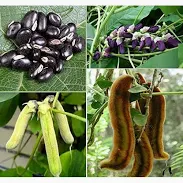
Velvet" refers to the velvet bean (Mucona Pruriens), a highly profitable medicinal legume. While it is widely used as a cover crop to restore soil health, its primary commercial value lies in its seeds. These seeds are in massive demand by the global pharmaceutical and nutraceutical industries.
1. How Beneficial is it for Marginal Farmers?
Velvet bean is a high-value medicinal and cover crop that offers significant advantages to small and marginal landholders:
- Low Input Costs: It is a hardy leguminous climber requiring minimal chemical fertilizers or intensive care, keeping initial investments low (approx. ₹5,000–₹6,000 per acre).
- High Market Demand: The seeds are rich in L-Dopa (used heavily in pharmaceutical formulations for Parkinson's disease and Ayurvedic nervine tonics), fetching lucrative prices in wholesale medicinal markets.
- Attractive Financial Returns: Under proper management, an acre can yield around 5 to 7 quintals of seeds. With average market rates, marginal farmers can secure a net profit of ₹20,000 to ₹25,000 per acre within a short span of 5 months.
- Soil Health Restoration: Being a legume, it naturally fixes atmospheric nitrogen, suppresses aggressive weeds, and acts as an organic green manure, reducing the cost of fertilizers for succeeding crops.
2. Brief Cultivation Method for Bihar, Jharkhand & UP
A. Agro-Climate & Season
- Sowing Window: Best sown at the onset of the monsoon (June to July) after the first 1–2 good rains.
- Climate: Thrives in hot, humid tropical to subtropical climates found across the plains of UP, Bihar, and the plateau regions of Jharkhand.
B. Soil Requirements
- Adapts well to a wide range of soils—from light sandy loam to medium soils.
- Crucial requirement: The land must be well-drained because waterlogging damages the root system quickly. For heavy clay soils, sowing on ridges or raised beds is recommended.
C. Land Preparation & Sowing
- Tillage: Requires light land preparation (1–2 ploughings followed by harrowing) since the seeds are large and vigorous.
- Seed Rate: About 3 kg to 4 kg of seeds per acre.
- Spacing: Maintain a row-to-row distance of about 45–60 cm and plant-to-plant spacing of 30 cm. Place 2–3 seeds per spot at a depth of 3–4 cm.
- Support System: Because it is a vigorous climber, providing a basic support system or intercropping with sturdy stalks (like maize or sorghum) helps maximize pod quality and yield.
D. Irrigation & Manuring
- Fertilizer: Minimal requirement. A basal dose of organic compost/FYM along with minor phosphatic fertilizer (like Single Super Phosphate) boosts initial root development. Nitrogen application is rarely needed since it fixes its own.
- Irrigation: Rainfed monsoon crop, but requires 1 or 2 life-saving irrigations during dry spells in September/October when the pods begin to fill.
E. Harvesting & Yield
- Crop Duration: Roughly 5 months.
- Harvesting Time: Pods mature around November. Harvesting is usually done when pods turn semi-dry/dark.
- Processing: Harvested pods are dried under shade, hand-shelled or threshed with sticks, and cleaned via winnowing to get clean, high-grade medicinal seeds.
Project Details
Start Date
01 Apr, 2026
End Date
01 Jan, 0001
Impact Area
Social Welfare
Support this Project
Your small contribution can make a significant difference in the success of this initiative.
Donate Now